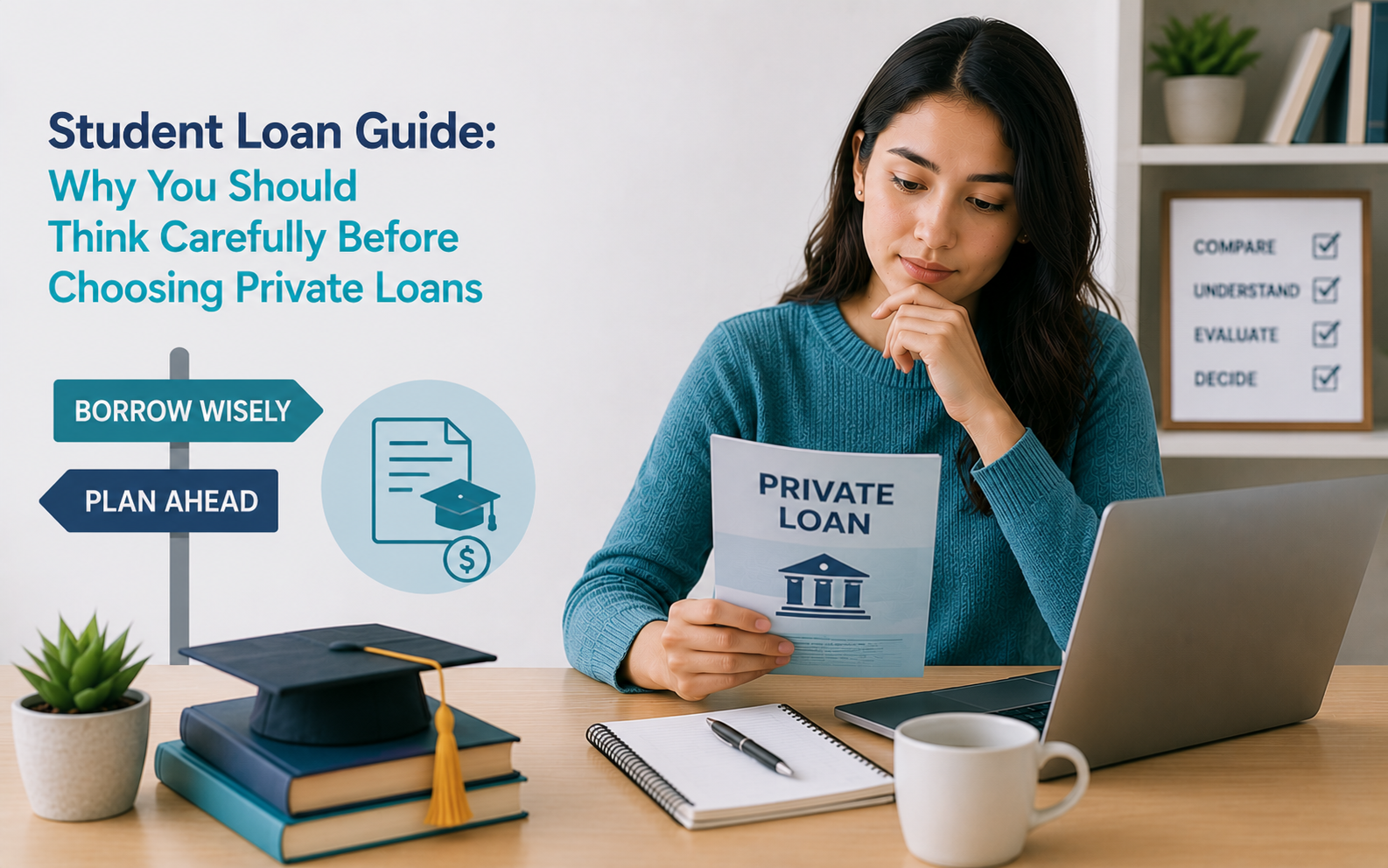
While a college degree can be one of the smartest purchases you ever make, getting one usually requires help. An education loan allows students to pay for tuition, textbooks, housing, and other expenses over time rather than paying up front.
However, not all loans give you the same advantages. Knowing its characteristics before borrowing can prevent you from facing difficulty when used to pay at school.
Know How Private Loans Work
A private lender gives a student loan on their own lending rules. For instance, many require a credit history, proof of income, or a qualified co-signer before approval. Comparing loan offers is a crucial step before making a decision since every lender has its own policies.
Before agreeing to any loan agreement, always search terms of repayment, interest charges, and borrower protections.
See also: How the Right Accounting Firm in Toronto Can Transform Your Business Finances
What Private Student Loans Can Put You at Risk for?
You must know the risks of relying on private student loans before borrowing. Private loans tend to have fewer protections and flexibility with repayment if you face financial challenges after graduation.
More so, you need to see if your creditor offers payment assistance or perhaps deferment for a certain time or alternatives on how you can repay the debt. This prepares you for making a smarter financial decision before you sign on the dotted line of a loan.
Look Beyond the Amount of Loan
The ability of students to borrow money, however, is limited but the long-term price problem is equally important. Scout every essential detail when you evaluate a student loan so that you need not settle down for the first offer.
Consider factors such as:
- Interest rates
- Loan repayment terms
- Grace periods
- Borrower support services
- Late payment policies
This also allows you to choose a loan that is good for your education, but fits best into your life after graduation as well.
Create a Borrowing Strategy
You can avoid degenerating into unnecessary debt, with a good financial plan. Prepare your education expenditures for the student loan before taking it out, and only take out the money to pay for tuition, books, accommodation, and basic living expenses.
Check your budget every semester and decrease future borrowing if you get scholarships, grants, or part-time work. Borrowing small amounts now makes a world of difference when repaying.
Prepare for Life After Graduation
The repayments commence sooner than many students anticipate. Find out when your first payment is due and how much it will be before you graduate, so you can plan for that too in a real-life monthly budget.
Consider paying on time and adding some extra dollars to the principal when available, because this helps in lowering interest costs so you can be debt-free sooner.
Final Thoughts
A student loan can be the key to accessing higher education; just remember to borrow responsibly since how well you do at repaying your debts from university may also dictate what you do after! Each penny is chosen for a good reason and with a solid repayment plan in mind.
Know the risks of private student loans before you get to your final choice, compare several lenders and read each loan contract very carefully. By making smart choices when borrowing, you can reach your education goals while also safeguarding your long-term financial future.