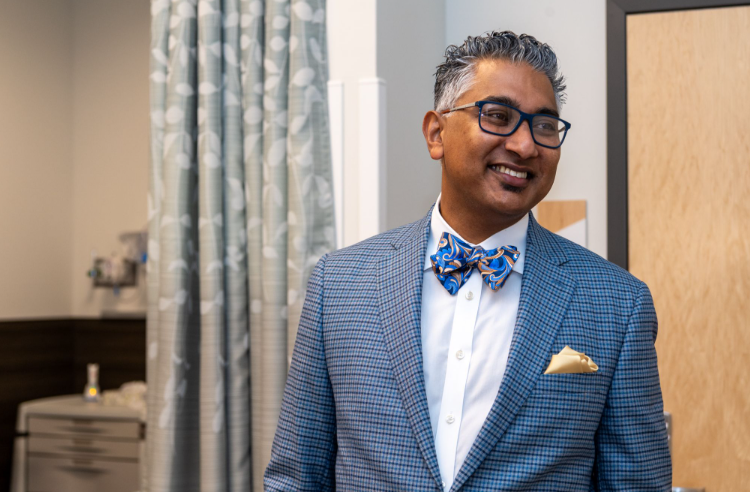
Spine care has entered a new era. Today, advanced treatment is not only about surgical skill or the newest equipment in the room. It is about how training, technology, leadership, and patient communication work together. That is what makes the professional biography of Kamal Woods, MD, MBA, FAANS, especially meaningful for patients researching Vertrae®.
Vertrae® identifies Dr. Woods as a board-certified neurosurgeon, founder of Vertrae® and Vertrae® Surgery Center, and a spine specialist with combined orthopedic and neurosurgery spine fellowship training at Cedars-Sinai Medical Center. His public background also includes neurosurgery residency training at Loma Linda University Medical Center and an MBA from Johns Hopkins University. Vertrae® describes his work as blending advanced spine technology, minimally invasive techniques, and personalized patient care.
Training That Connects Structure and Nerve Function
A major part of Dr. Woods’ bio is his combined orthopedic and neurosurgical spine fellowship training. That matters because the spine is not only a column of bones. It is also a pathway for the spinal cord and nerve roots, with discs, joints, ligaments, muscles, and alignment all playing important roles.
Orthopedic spine training helps evaluate structure, stability, alignment, and movement. Neurosurgical spine training helps evaluate nerve compression, neurological symptoms, spinal cord concerns, and related function. When patients experience back pain, neck pain, arm symptoms, leg pain, weakness, numbness, or sciatica, both perspectives can matter.
This kind of training supports modern spine decision-making. A treatment plan should not simply respond to an image on a screen. It should connect anatomy, symptoms, patient goals, and medical judgment. The spine is a busy neighborhood; good care requires knowing which “street” is actually causing the traffic jam.
Technology With a Purpose
Vertrae® materials describe Dr. Woods as an early adopter of technology, including robotics and advanced minimally invasive techniques. The practice also presents services related to robotic-assisted minimally invasive surgery, motion-preserving disc replacement, spinal fusion, spinal cord stimulation, spinal injections, physical therapy, and conservative care.
Technology can support precision, planning, and recovery goals, but it is not a shortcut around medical judgment. The most important question is not whether a tool exists. The question is whether it fits the patient’s diagnosis, anatomy, symptoms, health history, and goals.
For patients researching a physician profile and spine care model, Vertrae®: Kamal Woods, MD, MBA, FAANS, offers a starting point for learning about the practice’s spine-focused approach.
Board Certification and Advanced Clinical Experience
Vertrae® identifies Dr. Woods as board certified in neurosurgery, and his public CV lists American Board of Neurological Surgery certification. Board certification gives patients useful context because it reflects recognized specialty training and professional standards within neurological surgery.
For patients, this credential does not replace an individualized consultation, but it helps explain the foundation behind the care. Spine treatment can include nonsurgical care, physical therapy, injections, surgery, recovery planning, or monitoring. Those decisions require careful evaluation.
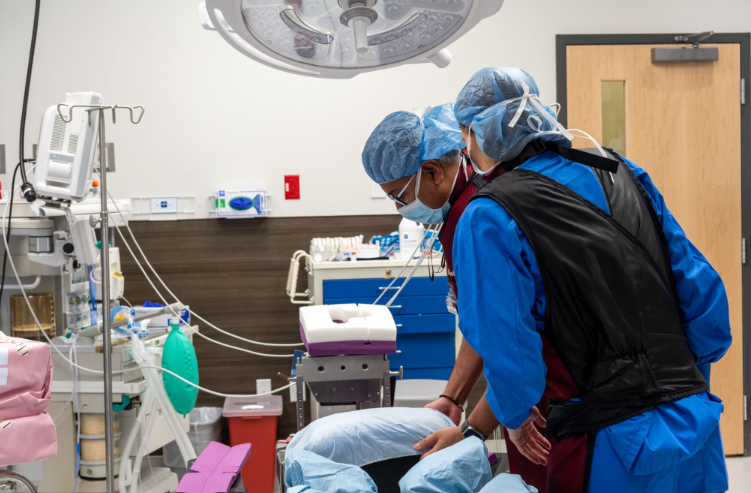
Dr. Woods’ public Vertrae® materials also describe him as having performed thousands of spine procedures and leading both the office-based comprehensive spine practice and Vertrae® Surgery Center. That experience adds context to the bio, especially for patients who want to understand the physician behind the recommendation.
Leadership That Shapes the Patient Journey
Dr. Woods’ MBA from Johns Hopkins adds another layer to the innovation story. Healthcare is not only about what happens during a procedure. It is also about how patients move through evaluation, diagnosis, treatment planning, education, scheduling, follow-up, and recovery.
A spine practice needs systems that make care clearer and more coordinated. Without that structure, even advanced treatment can feel confusing. Nobody wants their spine care journey to resemble assembling furniture with missing instructions and one mysterious extra screw.
Business training can support leadership, communication, process improvement, and practice design. In Dr. Woods’ bio, the MBA helps explain how clinical expertise and organizational thinking can work together. Innovation is not only found in surgical technology. It can also be found in a smoother, more understandable care experience.
See also: How the Right Accounting Firm in Toronto Can Transform Your Business Finances
Patient-Centered Care Remains the Core
The most important part of a modern spine care bio is not the equipment, the titles, or the training institutions alone. It is how those details support the patient. Vertrae® states that its goal is helping patients return to activities they love with personalized spine care that puts patient goals first. Public materials also describe Dr. Woods as someone who listens, explains complex procedures clearly, and treats patients as partners in the care journey.
That matters because spine conditions affect real life. A scan may show a disc problem or narrowing, but the patient explains what that means day to day. Can they walk comfortably? Sleep? Work? Drive? Exercise? Pick up a child? Get through dinner without shifting every two minutes?
For patients learning about the physician behind the practice, Dr. Kamal Woods provides information about Vertrae® and its spine care approach.
A Modern Bio Built for Better Questions
Dr. Woods’ biography reflects a combination of neurosurgical training, combined spine fellowship experience, board certification, technology adoption, leadership education, and patient-focused communication. Together, those details help patients understand the care model behind Vertrae®.
A strong physician bio does not tell patients exactly what treatment they need. That requires personal evaluation. What it does provide is context. It helps patients ask better questions: What is causing my symptoms? Do my imaging results match what I feel? What nonsurgical options are available? When is surgery considered? How does technology support the recommendation? What recovery expectations are realistic?
Modern spine care is not simply about doing more. It is about doing what fits the patient. Dr. Woods’ public profile helps explain how specialized training, advanced tools, and thoughtful leadership can support a clearer, more confident care journey.