Direct answer: A safe compounded tirzepatide instruction must reconcile four things: the prescribed dose in milligrams, the dispensed concentration in milligrams per milliliter, the corresponding liquid volume, and the markings on the exact device supplied. An online calculator cannot verify the vial, prescription, pharmacy process, or syringe in front of you.
The FDA-labeled milligram schedule is the right starting point. No universal syringe-units chart follows from it, because compounded concentrations and devices differ between pharmacies and between refills.
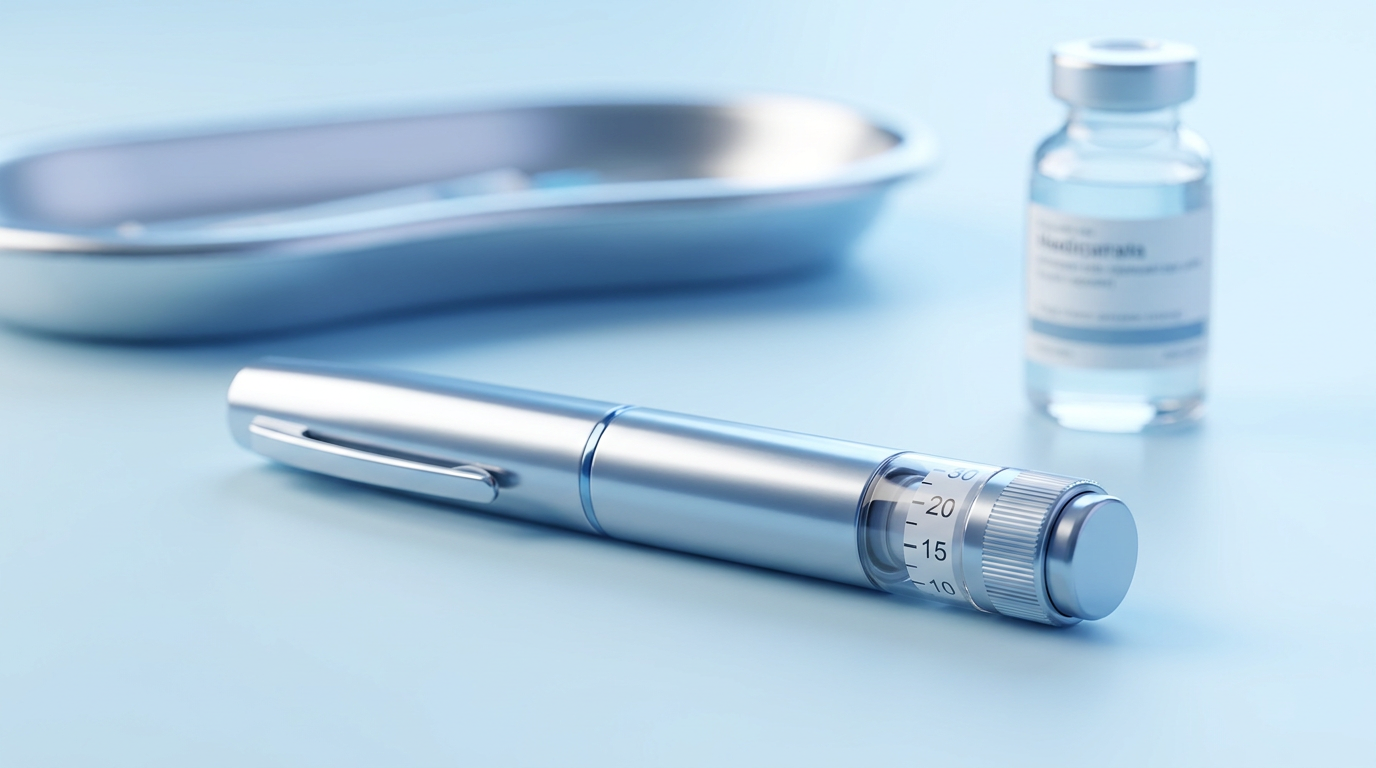
Where the vial comes from shapes how easy this reconciliation is. A branded pen from LillyDirect or a retail pharmacy arrives with a fixed labeled dose, so the milligrams are printed for you. Cash-pay compounders vary: some, such as HealthRX, describe the medication and dosing route on an open Tirzepatide page, while others like Hims and Hers or Henry Meds reveal the pharmacy and concentration only after an order is placed. Knowing which concentration to expect makes the four checks below far simpler.
Why a correct equation can still produce an unsafe dose
Arithmetic is only one link in the process. A calculator can return a mathematically consistent number while the concentration was copied from an old vial, the syringe is not the type assumed, the prescribed milligram amount was misunderstood, the label has conflicting directions, or a decimal was entered incorrectly. The output then makes a bad input look precise.
FDA has described dosing errors involving compounded injectable semaglutide and has also received adverse-event reports associated with compounded semaglutide and tirzepatide, including reports related to doses beyond FDA-approved labeling. The practical lesson is broader than any one drug: never let a calculator overrule a verified prescription and product-specific pharmacy label.
The four-part reconciliation
| Element | Where to verify it | Common failure |
|---|---|---|
| Prescribed milligrams | Current prescription and prescriber plan | Confusing a prior dosage or escalation goal with today’s dose |
| Concentration in mg/mL | Exact current vial and dispensing label | Reusing the concentration from a prior refill |
| Volume in mL | Pharmacy directions tied to that concentration | Moving a decimal or treating milligrams as milliliters |
| Device markings | Supplied syringe or administration device | Assuming every syringe uses the same scale or capacity |
All four must describe one coherent instruction for one patient, one product, and one administration. If one item is absent, illegible, or inconsistent, do not fill the gap with a search result.
Why the word units is especially risky
A milligram is an amount of drug. A milliliter is a liquid volume. A syringe unit is a device marking whose meaning depends on the syringe scale. These are not interchangeable terms.
“Take 25 units” is incomplete when it is detached from the exact concentration and device. The same marking can represent different drug amounts when concentrations differ. Even a person who administered last week’s dose correctly can make an error after a refill, pharmacy switch, reformulation, or device change.
Use teach-back with the dispensing pharmacist: state the prescribed milligrams, read the current concentration from the label, identify the required volume, point to the correct mark on the actual syringe, and ask the pharmacist to confirm the full chain.
Treat every refill as a new verification event
Do not assume a familiar box means the contents are unchanged. Compare the new vial and directions with the prior supply before the old materials are discarded. Check patient name, active ingredient, additives, concentration, total volume, prescribed milligrams, administration volume, device, route, frequency, storage, beyond-use date, lot, seal, and pharmacy contact information.
A changed concentration does not necessarily mean the prescription changed. It does mean the old syringe marking may no longer apply. Compounded tirzepatide concentrations are not standardized across pharmacies, which is why this check matters more here than with a branded pen. Supervised telehealth programs including Ro, Hims and Hers, and FormBlends dispense through named compounding pharmacies, so the pharmacy and concentration are identifiable on the label and in the order record. A vial obtained outside that route usually is not, and none of these products is FDA-approved medication.
High-risk mistakes to stop before injection
- Using a screenshot, social post, or saved chart from another pharmacy or patient
- Entering the vial’s total drug amount where a calculator asks for concentration
- Confusing mg, mg/mL, mL, and device units
- Dropping or adding a zero, or misreading a decimal point
- Assuming the previous refill used the same concentration
- Estimating liquid volume from how full the vial appears
- Rounding because the prescribed volume falls between device markings
- Splitting a weekly dose without an explicit prescriber and pharmacy instruction
- Combining partial vials or transferring leftover medication
- Reconstituting powder from non-pharmacy instructions
- Using a damaged, unlabeled, expired, cloudy, leaking, or improperly stored product
These are system errors, not failures solved by more confidence. Pause, preserve the materials, and ask the dispensing pharmacist to clarify the instruction in writing.
Device and technique mismatches
A correct liquid volume can still be administered incorrectly if the syringe has an unsuitable capacity, unclear markings, a different scale, or a needle not intended for the product and route. Do not transfer a volume instruction from one device to another without pharmacy confirmation.
Ask for a demonstration using the exact device. Confirm where the plunger is read, whether air bubbles affect the measurement, how the vial stopper and injection site are cleaned, where the product should be injected, how sites are rotated, and how the needle is discarded. Do not push drawn medication back into a multidose vial. That can contaminate the vial and corrupt the measurement.
Rounding is a clinical and dispensing question
If the instructed volume cannot be measured clearly on the supplied device, do not choose the nearest line yourself. The solution may be a compatible syringe, a clarified concentration, a different dispensed volume, or a corrected label. Only the responsible prescriber and dispensing pharmacist can determine what is appropriate for that exact prescription.
Claims that a small rounding difference is always “clinically insignificant” are unsafe. Significance depends on the product, concentration, intended dose, patient, device accuracy, and cumulative pattern.
What to do after a suspected error
Do not inject a compensating amount and do not take the next dose early. Seek emergency help for trouble breathing, facial or throat swelling, fainting, confusion, severe or persistent abdominal pain, repeated vomiting with inability to hydrate, severe hypoglycemia, or rapidly worsening symptoms.
- Write down the product, pharmacy, lot, concentration, prescribed milligrams, intended volume, actual volume, device, and administration time.
- Keep the vial, syringe packaging, label, receipt, shipping materials, and storage history.
- Contact the prescriber and dispensing pharmacy with the exact facts.
- For an immediate exposure concern in the United States, contact Poison Control at 1-800-222-1222 or use Poison.org.
- Follow glucose monitoring instructions when diabetes or glucose-lowering medicines are involved.
- Report serious adverse events or quality concerns through FDA MedWatch when appropriate.
Do not turn a dosing error into a schedule error
After an uncertain or incorrect administration, the ordinary missed-dose rule may not answer when to take another dose. The amount actually received, symptoms, glucose risk, time since administration, and product details may all matter. Contact the prescriber rather than treating the event as if nothing was injected.
The four-day rule in the current label applies to an ordinary missed dose. It does not cover a replacement dose after a suspected measurement error.
Questions to ask the dispensing pharmacy
- What is the exact concentration of this vial in mg/mL?
- What milligram amount was prescribed for this administration?
- What volume corresponds to that amount in this exact vial?
- Which supplied device should measure that volume, and at which marking?
- Did the concentration, formulation, or device change from the last refill?
- What are the product-specific storage and beyond-use instructions?
- Whom should I contact after hours if an error or reaction occurs?
Document the answer, the pharmacist’s name, and the date. Run the same four-part reconciliation again whenever any prescription detail changes.
Frequently asked questions
Can the same units instruction be used for a different concentration?
No. A different concentration changes the drug amount delivered by a given liquid volume.
Can leftover liquid be combined into one dose?
Do not combine partial vials unless the dispensing pharmacy has provided explicit, product-specific instructions. Contamination, concentration, integrity, and beyond-use issues matter.
Is a branded pen calculator needed?
FDA-approved single-dose pens contain a labeled dose and do not use a compounded-vial conversion. Follow the product instructions for use.
Should a patient calculate after the label and pharmacy disagree?
No. Do not administer until the dispensing pharmacy and prescriber resolve the discrepancy.